Why Uptime Matters in ASIC Mining Operations

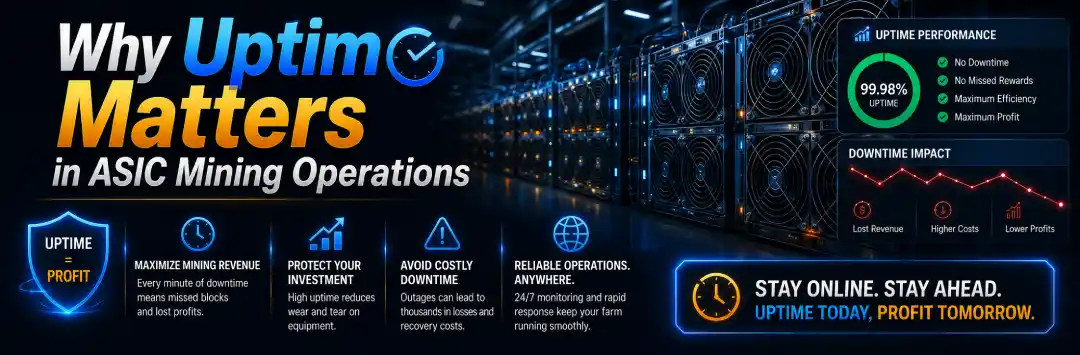
In cryptocurrency mining, profitability is directly connected to machine uptime. Every minute an ASIC miner is offline represents lost mining opportunities and reduced revenue potential.
While many investors focus on electricity costs and hardware specifications, experienced mining operators understand that uptime is one of the most important factors influencing long-term profitability.
For miners utilizing ASIC mining hosting in Thailand, infrastructure reliability and operational uptime are often just as important as electricity pricing.
What Is Uptime in ASIC Mining?
Uptime refers to the percentage of time that mining equipment remains operational and actively contributing hashrate to the mining network.
An ASIC miner running continuously contributes to revenue generation 24 hours a day. When that machine stops mining due to technical issues, power interruptions, network failures, or maintenance delays, revenue generation immediately stops.
This is why professional mining facilities closely monitor uptime performance.
How Downtime Impacts Mining Revenue
Cryptocurrency mining operates continuously. Mining rewards are distributed based on active participation in the network.
If a machine remains offline for extended periods, it simply misses opportunities to generate revenue.
Common causes of downtime include:
- Power interruptions
- Internet outages
- Overheating
- Hardware failures
- Cooling system issues
- Power supply problems
- Delayed technical response
Even a small reduction in uptime can significantly affect profitability when operating multiple ASIC miners.
The Difference Between 95% and 99% Uptime
Many investors underestimate the impact of uptime percentages.
A facility operating at 95% uptime may initially appear acceptable. However, the difference between 95% and 99% uptime becomes substantial over time.
For industrial mining operations running hundreds of machines, even a few percentage points of lost uptime can represent significant lost revenue annually.
This is one reason professional miners prioritize infrastructure quality over the lowest advertised hosting price.
Infrastructure Plays a Major Role
Maintaining high uptime requires more than reliable ASIC hardware.
The hosting environment itself must be designed to support continuous operation.
Critical infrastructure components include:
- Stable electrical systems
- Reliable internet connectivity
- Proper cooling systems
- Environmental monitoring
- Power distribution management
- Technical support availability
Investors evaluating Thailand mining infrastructure often focus on how these systems contribute to operational stability.
Power Stability Is Essential
ASIC miners are sensitive to power interruptions and electrical instability.
Unexpected outages can immediately stop mining operations and may require manual intervention before machines resume mining.
Professional hosting facilities typically implement:
- Industrial electrical systems
- Load balancing
- Power monitoring
- Circuit protection systems
- Preventive maintenance procedures
Reliable power infrastructure helps reduce unnecessary downtime and protects equipment from avoidable electrical issues.
Cooling Systems Protect Uptime
Heat is one of the biggest challenges in ASIC mining.
Without proper cooling, machines can experience performance degradation, thermal throttling, unexpected shutdowns, and accelerated component wear.
Professional mining facilities use cooling strategies designed to maintain consistent operating temperatures.
Important cooling considerations include:
- Airflow management
- Ventilation design
- Temperature monitoring
- Dust control
- Facility layout optimization
Effective cooling contributes directly to stable uptime and longer hardware lifespan.
Technical Support Reduces Downtime
Hardware failures cannot always be prevented, but response time can significantly influence overall uptime.
When a machine experiences issues, immediate diagnosis and repair can minimize lost mining time.
Professional hosting providers often offer:
- Machine inspection
- Fan replacement
- Power supply diagnostics
- Hash board troubleshooting
- Firmware support
- Emergency restart services
Access to ASIC repair and technical support is therefore an important factor when selecting a hosting provider.
Remote Monitoring Improves Operational Visibility
Modern mining operations rely heavily on monitoring systems.
Remote monitoring enables operators to detect problems before they become major disruptions.
Common monitoring capabilities include:
- Hashrate monitoring
- Machine status alerts
- Temperature tracking
- Power consumption reports
- Online/offline notifications
- Maintenance records
For foreign investors managing equipment remotely, these tools are critical for maintaining high uptime.
Why Large Mining Operations Focus on Uptime
As mining operations scale, uptime becomes increasingly important.
A single machine going offline may have limited impact. However, when operating dozens, hundreds, or thousands of ASIC miners, downtime can quickly affect overall profitability.
Large operators often prioritize:
- Infrastructure reliability
- Facility redundancy
- Rapid technical response
- Preventive maintenance
- Continuous monitoring
These measures help maximize operational efficiency and reduce unexpected interruptions.
What Investors Should Ask Hosting Providers
Before selecting a mining facility, investors should evaluate how uptime is managed.
Important questions include:
- What uptime levels are typically achieved?
- How is power stability maintained?
- What cooling systems are used?
- Is monitoring available 24/7?
- How quickly are technical issues addressed?
- What maintenance procedures are in place?
The answers to these questions often provide more insight than hosting fees alone.
Uptime Is One of the Most Valuable Mining Assets
Electricity costs, hardware efficiency, and cryptocurrency prices all influence mining profitability. However, none of these factors matter if machines are not actively mining.
Consistent uptime allows investors to maximize the performance of their hardware while minimizing lost opportunities.
For serious mining operators, uptime is not simply a technical metric. It is one of the key drivers of long-term profitability and operational success.
Investors interested in professional mining environments can also explore how foreign investors host ASIC miners in Thailand and evaluate facilities designed for continuous industrial operation.
Additional information about Bitcoin mining and ASIC hardware technologies can be found through Bitcoin.org and Bitmain.