Colocation vs Self-Managed Mining: Which Is Better for ASIC Miners?

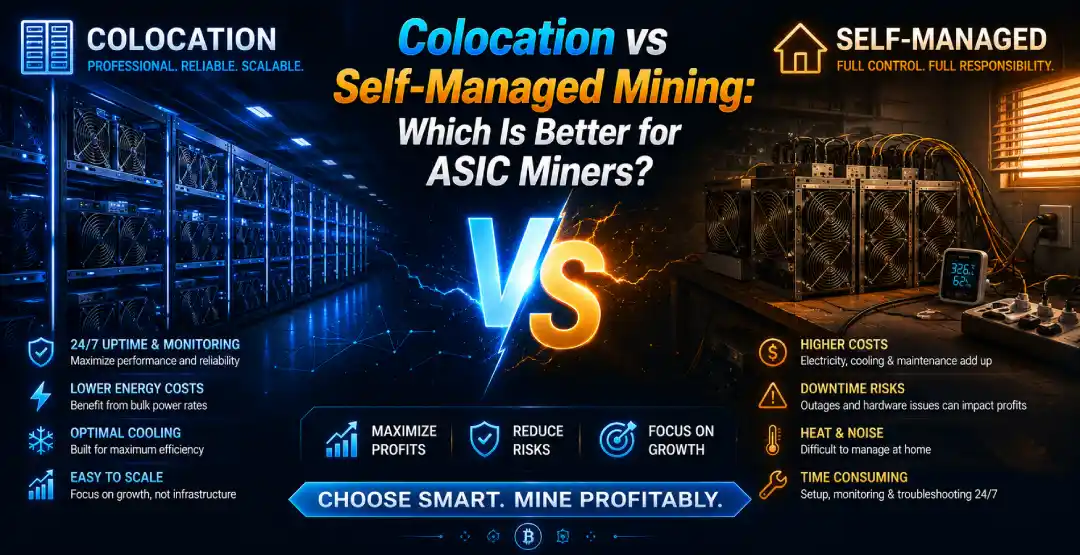
One of the most important decisions cryptocurrency miners face is whether to operate ASIC miners themselves or use a professional colocation facility. Both approaches have advantages and challenges, and the best choice often depends on the investor’s experience, available resources, and long-term objectives.
As mining operations become more competitive and infrastructure requirements continue to increase, many investors are reconsidering whether self-managed mining remains the most efficient option.
For miners evaluating ASIC mining hosting in Thailand, understanding the differences between colocation and self-managed mining is an important first step.
What Is Self-Managed Mining?
Self-managed mining means the investor owns and operates the entire mining environment. This includes purchasing equipment, setting up infrastructure, managing electricity, maintaining cooling systems, and handling technical issues.
The miner is responsible for everything required to keep the operation running.
Typical responsibilities include:
- Electrical installation
- Cooling and ventilation
- Internet connectivity
- Machine monitoring
- Hardware maintenance
- Security management
- Troubleshooting and repairs
While this approach provides complete control, it also requires significant time, expertise, and infrastructure investment.
What Is Colocation Mining?
Colocation mining allows investors to place their ASIC miners in a professional hosting facility operated by a third-party provider.
The investor retains ownership of the machines, while the hosting provider manages the infrastructure and daily operations.
Most colocation facilities provide:
- Electricity supply
- Cooling systems
- Internet connectivity
- Physical security
- Remote monitoring
- Technical support
- Basic maintenance services
This allows investors to focus on mining performance rather than facility management.
Initial Infrastructure Costs
One of the largest differences between the two approaches is infrastructure investment.
Self-managed mining typically requires upfront spending on:
- Electrical systems
- Distribution panels
- Cooling equipment
- Ventilation systems
- Networking equipment
- Security systems
- Facility modifications
Colocation facilities already have this infrastructure in place, allowing investors to avoid substantial setup costs.
Power Management
ASIC miners consume large amounts of electricity continuously. Managing power safely and efficiently becomes increasingly difficult as operations grow.
Professional hosting facilities are designed specifically for high-load industrial operation.
Advantages of colocation include:
- Industrial electrical infrastructure
- Load balancing systems
- Power monitoring
- Scalable capacity planning
- Professional maintenance procedures
Investors interested in power considerations can also review electricity cost for ASIC mining in Thailand.
Cooling and Heat Management
Heat is one of the biggest challenges in ASIC mining.
Self-managed operators often underestimate the impact of heat generation, especially when deploying multiple machines.
Without proper cooling, miners may experience:
- Thermal throttling
- Reduced efficiency
- Unexpected shutdowns
- Accelerated hardware wear
- Increased maintenance requirements
Professional colocation facilities are typically designed with airflow management and cooling infrastructure optimized for continuous operation.
Technical Support
ASIC miners occasionally experience hardware failures, firmware issues, and operational problems.
In a self-managed environment, the investor must diagnose and resolve these issues independently.
Colocation facilities often provide access to experienced technicians who can assist with:
- Machine diagnostics
- Fan replacement
- Power supply troubleshooting
- Hash board inspection
- Firmware support
- Preventive maintenance
Investors should also evaluate available ASIC repair and technical support when comparing options.
Uptime and Reliability
Maintaining consistent uptime is one of the most important factors in mining profitability.
Professional hosting facilities are specifically designed to maximize operational uptime.
Infrastructure advantages may include:
- Stable power systems
- Professional cooling infrastructure
- Continuous monitoring
- Rapid issue response
- Dedicated technical staff
Investors interested in operational performance can also explore why uptime matters in ASIC mining operations.
Remote Management Capabilities
Modern mining operations increasingly rely on remote management tools.
Self-managed miners often need to build monitoring systems themselves.
Many colocation providers already offer:
- Hashrate monitoring
- Temperature tracking
- Power consumption reports
- Machine status alerts
- Performance analytics
- Maintenance reporting
This improves operational visibility and simplifies management.
Investors can learn more about remote monitoring for ASIC mining farms and its role in professional hosting environments.
Scalability
Scaling a mining operation is often where self-managed environments become challenging.
A setup that works for a handful of machines may become difficult to manage as deployments grow.
Expansion often requires:
- Additional electrical capacity
- More cooling infrastructure
- Facility modifications
- Additional monitoring systems
- More maintenance resources
Professional colocation facilities are generally better equipped to support large-scale expansion.
Who Should Consider Self-Managed Mining?
Self-managed mining may be suitable for investors who:
- Have technical expertise
- Own suitable infrastructure
- Operate a small number of machines
- Prefer complete operational control
- Have time for ongoing management
However, operational complexity tends to increase rapidly as mining fleets expand.
Who Should Consider Colocation?
Colocation may be more appropriate for investors who:
- Want professional infrastructure
- Operate multiple ASIC miners
- Prefer remote management
- Need technical support
- Plan future expansion
- Want to reduce operational workload
This model is particularly attractive for international investors managing equipment remotely.
Those exploring international deployment options can also review how foreign investors can host ASIC miners in Thailand.
Which Approach Is Better?
Neither option is universally better. The right choice depends on the investor’s resources, goals, and operational capabilities.
Self-managed mining offers maximum control but requires greater responsibility and infrastructure investment.
Colocation offers professional infrastructure, operational support, and easier scalability, allowing investors to focus on mining performance rather than facility management.
As ASIC mining becomes increasingly professional, many investors are finding that reliable infrastructure, technical expertise, and operational uptime provide greater long-term value than managing facilities independently.
For additional information about Bitcoin mining and ASIC hardware technologies, investors can explore Bitcoin.org and Bitmain.