Cooling Solutions for ASIC Mining Facilities

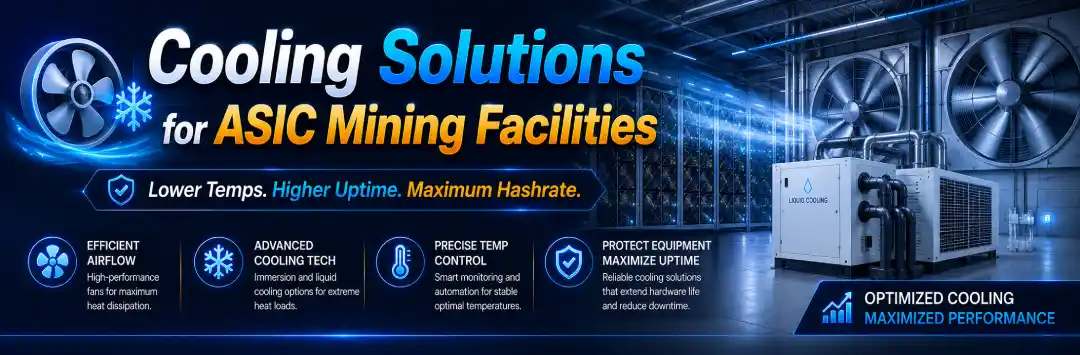
Cooling is one of the most critical components of a successful ASIC mining operation. Modern mining hardware generates significant heat while operating continuously, making temperature management essential for maintaining performance, maximizing uptime, and extending equipment lifespan.
As mining farms grow larger and more powerful, cooling systems become increasingly important to overall operational efficiency.
For investors considering ASIC mining hosting in Thailand, understanding cooling infrastructure is an important part of evaluating a professional mining facility.
Why Cooling Matters in ASIC Mining
ASIC miners convert large amounts of electrical energy into computational work and heat. Without proper cooling, operating temperatures can rise quickly, creating conditions that negatively affect mining performance.
Excessive heat may lead to:
- Reduced hashrate performance
- Thermal throttling
- Unexpected shutdowns
- Higher fan speeds
- Accelerated hardware wear
- Shortened equipment lifespan
Effective cooling systems help maintain stable operating conditions and improve long-term profitability.
The Relationship Between Heat and Profitability
Many miners focus primarily on electricity costs, but heat management can have a direct impact on profitability.
When machines operate at excessive temperatures, they may become less efficient or experience downtime due to thermal protection systems.
Maintaining optimal operating temperatures helps miners achieve:
- Stable hashrate output
- Higher uptime
- Improved energy efficiency
- Reduced maintenance costs
- Longer equipment life
This is one reason professional mining operators invest heavily in cooling infrastructure.
Air Cooling: The Most Common Solution
Air cooling remains the most widely used cooling method in ASIC mining facilities.
Most ASIC miners are designed with integrated fans that move air through the machine to remove heat generated by internal components.
Successful air-cooled facilities typically focus on:
- Airflow management
- Ventilation design
- Heat extraction systems
- Temperature monitoring
- Dust control
When properly designed, air cooling can provide reliable performance for both small and large mining operations.
Hot Aisle and Cold Aisle Design
Professional mining facilities often separate incoming cool air from outgoing hot air.
This approach improves cooling efficiency and reduces the risk of hot air recirculation.
Benefits include:
- More consistent temperatures
- Improved airflow efficiency
- Reduced cooling costs
- Better equipment performance
- Simplified facility management
Hot aisle and cold aisle layouts have become standard practice in many industrial mining environments.
Ventilation Systems
Proper ventilation is essential for removing heat from mining facilities.
Without adequate ventilation, hot air can accumulate and reduce cooling effectiveness.
Professional facilities often use:
- Industrial exhaust fans
- High-capacity intake systems
- Airflow control systems
- Temperature-controlled ventilation
- Pressure management systems
Ventilation design becomes increasingly important as mining operations scale.
Immersion Cooling
Immersion cooling is an advanced cooling technology that places mining hardware inside a specially engineered non-conductive liquid.
The liquid absorbs heat directly from electronic components and transfers it away more efficiently than traditional air cooling.
Potential benefits include:
- Lower operating temperatures
- Reduced fan usage
- Improved energy efficiency
- Lower noise levels
- Potential performance optimization
However, immersion cooling generally requires higher initial investment and specialized facility design.
Environmental Factors
The surrounding environment plays an important role in cooling performance.
Facility operators must consider:
- Ambient temperature
- Humidity levels
- Dust exposure
- Seasonal weather patterns
- Air quality
Environmental monitoring helps operators maintain consistent operating conditions throughout the year.
Investors evaluating Thailand mining infrastructure should consider how facilities manage local environmental conditions.
Monitoring Cooling Performance
Modern mining facilities rely on continuous monitoring systems to maintain cooling efficiency.
Important metrics include:
- Machine temperatures
- Ambient temperatures
- Fan performance
- Airflow measurements
- Humidity levels
- Cooling system status
Real-time monitoring allows operators to detect potential issues before they impact mining performance.
Many facilities integrate these systems with remote monitoring for ASIC mining farms to improve operational visibility.
Cooling and Uptime
Cooling systems play a direct role in maintaining uptime.
Overheating is one of the most common causes of mining disruptions.
Effective cooling helps prevent:
- Thermal shutdowns
- Performance degradation
- Component failures
- Unexpected downtime
Investors focused on profitability should understand that cooling infrastructure is closely connected to operational reliability.
For a deeper discussion, miners can also review why uptime matters in ASIC mining operations.
Maintenance Requirements for Cooling Systems
Cooling systems require regular inspection and maintenance to remain effective.
Common maintenance activities include:
- Cleaning air filters
- Inspecting ventilation equipment
- Monitoring fan performance
- Checking airflow paths
- Removing dust accumulation
- Reviewing temperature trends
Preventive maintenance helps reduce cooling-related failures and improves long-term system reliability.
Choosing a Facility with Effective Cooling Infrastructure
Before selecting a hosting provider, investors should evaluate how cooling is managed within the facility.
Important questions include:
- How is heat removed from the facility?
- What temperature ranges are maintained?
- How is airflow managed?
- What monitoring systems are used?
- How frequently is cooling equipment maintained?
- Can the cooling system support future expansion?
The answers often reveal how professionally a mining facility is operated.
Cooling Is a Core Part of Mining Infrastructure
Cooling should never be viewed as a secondary consideration in ASIC mining.
It directly affects performance, uptime, maintenance requirements, and equipment lifespan. As mining hardware becomes more powerful, cooling infrastructure becomes increasingly important to operational success.
For investors seeking long-term mining profitability, facilities that prioritize efficient cooling systems often provide more stable and predictable operating environments.
Those comparing hosting options can also explore how foreign investors can host ASIC miners in Thailand when evaluating professional mining facilities.
For additional information about Bitcoin mining and ASIC hardware technologies, investors can visit Bitcoin.org and Bitmain.