Common ASIC Miner Hardware Failures

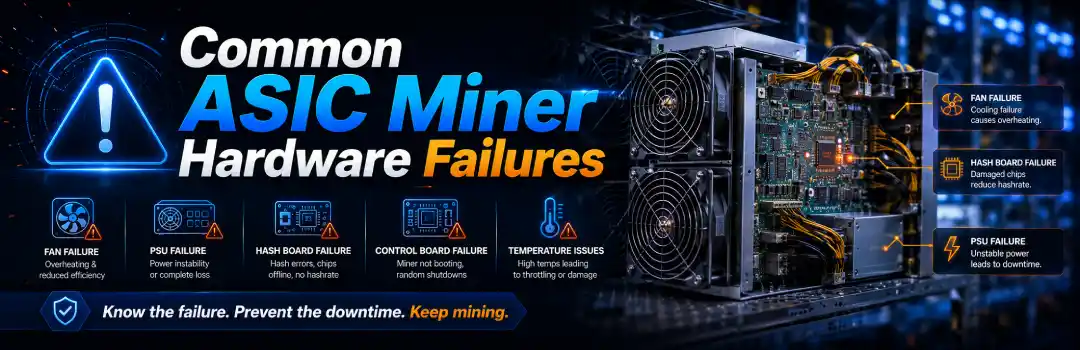
ASIC miners are designed for continuous operation and can run twenty-four hours a day for extended periods. However, like any electronic equipment operating under heavy workloads, hardware failures can occur over time.
Understanding the most common ASIC miner hardware failures can help investors reduce downtime, improve maintenance planning, and protect long-term mining profitability.
For operators using ASIC mining hosting in Thailand, early detection and rapid response to hardware issues are essential for maintaining consistent mining performance.
Why ASIC Hardware Fails
ASIC miners operate in demanding environments where components are exposed to heat, electrical loads, dust, and continuous operation.
Common factors contributing to hardware failures include:
- Heat stress
- Dust accumulation
- Electrical fluctuations
- Component aging
- Poor cooling
- Power supply instability
- Improper maintenance
While some failures are unavoidable, many can be reduced through preventive maintenance and proper infrastructure management.
Hash Board Failures
Hash boards are responsible for performing the computational work required for cryptocurrency mining.
Because they operate continuously under high workloads, hash boards are among the most common failure points in ASIC miners.
Typical symptoms include:
- Reduced hashrate
- Missing hash boards
- Error messages
- Intermittent performance
- Unstable operation
Hash board failures can significantly reduce mining revenue until the problem is diagnosed and repaired.
Power Supply Unit (PSU) Failures
The power supply unit provides electricity to the miner’s internal components.
Because PSUs operate continuously under heavy load, they are one of the most frequently replaced components in mining operations.
Signs of PSU failure may include:
- Unexpected shutdowns
- Boot failures
- Power instability
- Reduced performance
- Machines failing to start
Stable electrical infrastructure helps reduce stress on power supply units and improve long-term reliability.
Investors can also review redundant power systems for mining farms to understand how professional facilities improve power stability.
Cooling Fan Failures
Cooling fans play a critical role in maintaining safe operating temperatures.
Fan failures can quickly lead to overheating and performance issues.
Common warning signs include:
- Abnormal fan speeds
- Increased temperatures
- Noise changes
- Thermal warnings
- Unexpected shutdowns
Regular fan inspection and replacement are important parts of preventive maintenance.
Control Board Problems
The control board acts as the central management system for an ASIC miner.
It coordinates communication between the operating system, hash boards, cooling systems, and mining pools.
Control board issues may result in:
- Boot failures
- Network connectivity problems
- Configuration issues
- Machine instability
- Communication errors
Diagnosing control board problems often requires specialized technical knowledge.
Overheating Damage
Excessive heat is one of the leading causes of long-term hardware degradation.
When cooling systems are insufficient, components may experience increased wear and reduced reliability.
Potential consequences include:
- Hash board damage
- Fan failures
- Power supply stress
- Performance degradation
- Unexpected downtime
Professional cooling infrastructure helps reduce these risks significantly.
Investors can learn more about cooling solutions for ASIC mining facilities and their role in hardware protection.
Dust-Related Hardware Problems
Dust is often overlooked but can become a serious operational issue.
Over time, dust accumulation can obstruct airflow and increase internal temperatures.
Dust-related issues may include:
- Reduced cooling efficiency
- Higher operating temperatures
- Fan wear
- Component contamination
- Increased maintenance requirements
Routine cleaning is an important part of maintaining mining equipment.
Network Interface Failures
Although less common than hardware-related issues, network problems can prevent ASIC miners from communicating with mining pools.
Symptoms may include:
- Offline status
- Pool connection errors
- Intermittent connectivity
- Rejected shares
- Communication failures
Stable networking infrastructure helps minimize these operational disruptions.
Firmware-Related Issues
Not all mining problems originate from physical hardware.
Firmware issues can sometimes mimic hardware failures and affect machine performance.
Potential symptoms include:
- Hashrate instability
- Unexpected restarts
- Configuration errors
- Connectivity issues
- Monitoring inconsistencies
Professional technical support can often identify whether a problem is hardware-related or software-related.
How Monitoring Helps Detect Failures Early
Modern mining operations rely heavily on monitoring systems to identify problems before they become major failures.
Important monitoring metrics include:
- Hashrate performance
- Temperature readings
- Power consumption
- Fan speeds
- Online status
- Error reporting
Early detection often reduces repair costs and minimizes downtime.
Additional information can be found in our guide to remote monitoring for ASIC mining farms.
The Cost of Ignoring Hardware Problems
Minor hardware issues rarely improve on their own.
When left unresolved, small problems can lead to:
- Extended downtime
- Reduced profitability
- Additional component failures
- Higher repair costs
- Shortened equipment lifespan
Prompt diagnosis and maintenance often provide the most cost-effective solution.
Why Professional Technical Support Matters
As mining operations grow, technical support becomes increasingly important.
Experienced technicians can help identify hardware failures quickly and restore equipment to service with minimal disruption.
Professional support may include:
- Diagnostics
- Repair services
- Component replacement
- Preventive maintenance
- Firmware support
- Performance optimization
Investors can also explore ASIC repair and maintenance services to understand how professional support improves mining operations.
Reliable Hardware Management Improves Profitability
Hardware failures are an unavoidable part of long-term mining operations. However, the impact of those failures can be minimized through proper infrastructure, monitoring systems, preventive maintenance, and rapid technical response.
Mining operators who actively manage hardware health often achieve better uptime, lower maintenance costs, and more consistent long-term profitability than those who rely on reactive repairs alone.
For additional information about Bitcoin mining and ASIC hardware technologies, investors can visit Bitcoin.org and Bitmain.