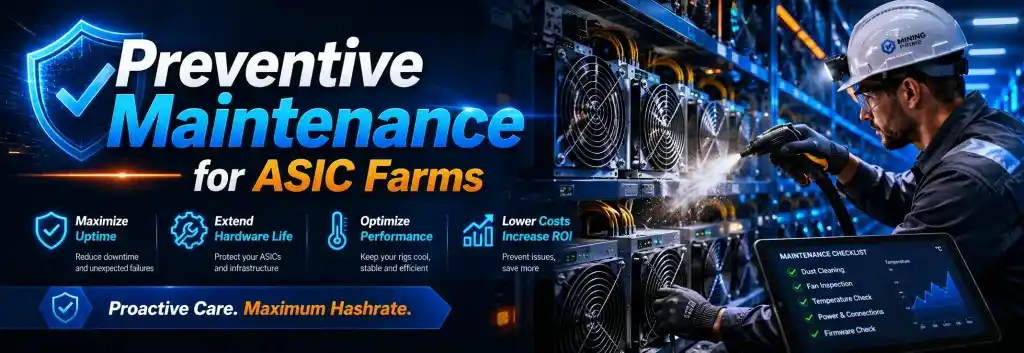
Preventive Maintenance for ASIC Farms

In large-scale cryptocurrency mining operations, profitability depends on more than hashrate and electricity costs. Equipment reliability, uptime, and operational efficiency play equally important roles in long-term success.
One of the most effective ways to maintain stable mining performance is through preventive maintenance. Rather than waiting for hardware failures to occur, preventive maintenance focuses on identifying and addressing potential issues before they cause downtime.
For operators using ASIC mining hosting in Thailand, preventive maintenance is often a key component of maintaining high uptime and protecting equipment investments.
What Is Preventive Maintenance?
Preventive maintenance is a proactive approach to equipment management. Instead of reacting to failures after they occur, technicians perform routine inspections, monitoring, cleaning, and servicing to reduce the likelihood of unexpected breakdowns.
The primary objective is to keep ASIC miners operating efficiently while minimizing interruptions to mining operations.
Common preventive maintenance activities include:
- Equipment inspections
- Cooling system checks
- Dust removal
- Temperature monitoring
- Fan testing
- Power system inspections
- Firmware verification
Why Preventive Maintenance Matters
ASIC miners operate continuously under demanding conditions. Heat, dust, vibration, and electrical loads can gradually affect hardware performance over time.
Without routine maintenance, minor issues may develop into major failures that require expensive repairs and extended downtime.
Preventive maintenance helps:
- Reduce unexpected failures
- Improve uptime
- Extend hardware lifespan
- Maintain mining efficiency
- Lower repair costs
- Improve operational reliability
For industrial mining operations, even small improvements in uptime can have a significant impact on long-term profitability.
Dust Management and Cleaning
Dust is one of the most common threats to ASIC mining equipment.
Over time, dust can accumulate on fans, heat sinks, and internal components, reducing cooling efficiency and increasing operating temperatures.
Routine cleaning helps:
- Maintain airflow
- Reduce thermal stress
- Improve cooling performance
- Prevent overheating
- Extend component lifespan
Professional mining facilities often incorporate scheduled cleaning into their maintenance programs.
Temperature Monitoring
Heat is one of the leading causes of ASIC hardware degradation.
Continuous temperature monitoring helps identify abnormal operating conditions before they result in hardware failures.
Important metrics include:
- Chip temperatures
- Ambient temperatures
- Airflow performance
- Cooling efficiency
- Thermal trends
Operators who monitor temperatures consistently are often able to detect problems before mining performance is affected.
Additional information can be found in our guide to cooling solutions for ASIC mining facilities.
Fan Inspection and Replacement
Cooling fans are among the most heavily used components in ASIC miners.
Because they operate continuously, fan performance should be inspected regularly.
Common maintenance checks include:
- Fan speed monitoring
- Noise inspection
- Physical wear assessment
- Airflow verification
- Preventive replacement scheduling
Replacing worn fans before failure occurs can prevent overheating and reduce downtime.
Power System Inspections
Stable electrical performance is critical for mining operations.
Routine inspections help identify potential issues before they affect equipment reliability.
Maintenance activities may include:
- Power supply testing
- Cable inspections
- Connector verification
- Load monitoring
- Voltage analysis
Reliable power systems help protect both uptime and hardware longevity.
Investors interested in power infrastructure can also review redundant power systems for mining farms.
Firmware and Configuration Reviews
Firmware plays an important role in machine stability and performance.
Periodic reviews help ensure systems remain properly configured and compatible with operational requirements.
Common tasks include:
- Firmware verification
- Configuration audits
- Performance validation
- Error log reviews
- Software stability checks
Maintaining stable configurations helps reduce unexpected operational issues.
Monitoring Performance Trends
Preventive maintenance is not limited to physical inspections.
Monitoring historical performance data often reveals developing problems before they become critical failures.
Operators commonly track:
- Hashrate trends
- Temperature trends
- Power consumption patterns
- Fan performance
- Uptime statistics
- Error frequency
Performance analysis helps maintenance teams prioritize attention where it is most needed.
Investors can learn more through our guide to remote monitoring for ASIC mining farms.
Reducing Downtime Through Prevention
The primary goal of preventive maintenance is reducing downtime.
By identifying and correcting issues early, operators can avoid many of the failures that interrupt mining operations.
Benefits include:
- Higher uptime
- More stable hashrate
- Reduced repair frequency
- Lower operational risk
- Improved profitability
For large-scale mining farms, even small uptime improvements can generate meaningful financial benefits.
Additional insights are available in our article on why uptime matters in ASIC mining operations.
Preventive Maintenance vs Emergency Repairs
Emergency repairs occur after equipment has already failed. At that point, downtime is unavoidable.
Preventive maintenance focuses on preventing failures before they occur.
Compared with reactive repairs, preventive maintenance typically offers:
- Lower repair costs
- Shorter interruptions
- More predictable operations
- Better resource planning
- Improved equipment reliability
Most professional mining operations prioritize prevention whenever possible.
Scaling Maintenance as Mining Farms Grow
As mining operations expand, maintenance requirements become increasingly complex.
A maintenance strategy suitable for ten machines may not be sufficient for hundreds or thousands.
Large-scale farms often require:
- Scheduled maintenance programs
- Dedicated technicians
- Maintenance tracking systems
- Inventory management
- Performance reporting
Structured maintenance processes become essential for maintaining operational efficiency at scale.
Investors planning expansion can also review scaling from 10 to 1000 ASIC machines to understand infrastructure and operational growth requirements.
What Investors Should Look For
Before selecting a hosting provider, investors should evaluate the facility’s maintenance procedures.
Important questions include:
- Are routine inspections performed?
- How often are machines cleaned?
- Are temperatures monitored continuously?
- How are maintenance records tracked?
- Are technicians available on-site?
- What preventive procedures are in place?
The answers often reveal how seriously a facility approaches operational reliability.
Preventive Maintenance Is an Investment, Not a Cost
Many mining operators view maintenance as an operational expense. Experienced operators view it differently.
Preventive maintenance helps protect expensive hardware, improve uptime, reduce repair costs, and maintain stable mining performance. Over time, these benefits often outweigh the resources invested in routine maintenance programs.
For investors focused on long-term profitability, preventive maintenance should be considered a core part of mining infrastructure rather than an optional service.
Those evaluating technical support capabilities can also explore ASIC repair and maintenance services to understand how professional maintenance programs support mining operations.
For additional information about Bitcoin mining and ASIC hardware technologies, investors can visit Bitcoin.org and Bitmain.